

Analog Oscilloscope Calibration Service
Reliable waveform measurement depends on more than a functioning instrument. In many maintenance labs, service centers, training facilities, and legacy production environments, analogue oscilloscopes are still used for signal observation, troubleshooting, and comparison work. When trace accuracy, time base performance, and vertical response begin to drift, a proper Analog Oscilloscope Calibration Service helps restore confidence in day-to-day measurements.
This category is intended for users who need calibration support for analogue scope platforms used in electronics testing and general bench work. Whether the instrument is part of a routine quality program or needs verification before continued use, calibration helps confirm that the oscilloscope is performing within expected measurement behavior and is suitable for its intended application.
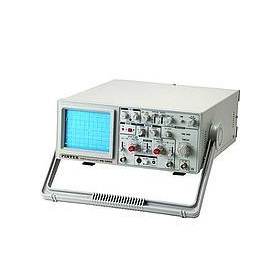
Why calibration still matters for analogue oscilloscopes
Even though many facilities have moved toward digital instruments, analogue models remain common in education, repair benches, field support, and long-established test setups. These instruments can be valued for their direct trace behavior and familiar controls, but like any measurement device, they are affected by component aging, environmental conditions, and regular use over time.
A structured calibration process helps verify key operating characteristics such as vertical accuracy, time base behavior, triggering response, and general display consistency. For organizations that follow internal maintenance intervals or external quality procedures, calibration also supports better traceability and more consistent measurement decisions across different users and workstations.
What this service category typically supports
This service category focuses on analogue oscilloscopes used for observing voltage signals over time in laboratory, maintenance, and industrial electronics environments. The goal is not simply to confirm that the unit powers on, but to assess whether it continues to provide dependable measurement performance for practical use.
Depending on the instrument and service scope, calibration work may involve checking signal display response, evaluating timing performance, and confirming that the scope remains usable for waveform analysis and comparative diagnostics. For organizations managing a mixed fleet of instruments, this category sits naturally alongside digital oscilloscope calibration services when both legacy and newer test platforms need regular attention.
Typical situations where calibration is requested
Calibration is often scheduled as part of preventive maintenance, annual quality review, or incoming inspection after equipment transfer between departments or sites. It is also relevant when an oscilloscope has been stored for a long period, relocated, or returned to service after repair.
In practice, users may request calibration when they notice unstable traces, questionable amplitude readings, inconsistent timing, or triggering behavior that no longer matches expected signal conditions. Even when no obvious fault is visible, periodic verification remains useful because measurement drift may develop gradually and go unnoticed during routine troubleshooting work.
Examples of available service options
Within this category, representative offerings include the GW INSTEK Analogue Oscilloscope Calibration Service and the PINTEK Analogue Oscilloscope Calibration Service. These examples are useful for buyers who are looking for brand-specific service pathways within an analogue oscilloscope environment.
Where relevant, brand preference can also influence purchasing or service planning. Users working with equipment from GW INSTEK or PINTEK may prefer to review manufacturer-related options first, especially when they want service aligned with existing equipment fleets, maintenance records, or internal sourcing policies.
How to choose the right analogue oscilloscope calibration service
A practical selection process starts with the instrument type, intended use, and calibration interval required by your organization. Bench scopes used for instructional work may have different priorities from units used in repair verification, incoming inspection, or process support. It is helpful to confirm the scope model family, usage frequency, and whether documentation or records are needed for audit or maintenance control.
Buyers should also consider whether the oscilloscope is a standalone bench instrument or part of a broader test ecosystem. If your site also uses other form factors, related service categories such as handheld oscilloscope calibration can be relevant when standardizing service planning across multiple teams and applications.
Analogue calibration in mixed instrument environments
Many engineering and maintenance departments do not operate with analogue instruments alone. It is common to see older bench oscilloscopes used alongside digital, PC-based, or portable units, each serving a different purpose depending on signal type, user preference, and workflow. In these environments, calibration planning benefits from grouping services by instrument style while maintaining a consistent maintenance schedule.
Analogue calibration remains especially relevant where legacy test methods are still embedded in procedures or where technicians rely on familiar visual waveform behavior for quick diagnostics. A well-managed calibration approach helps extend the useful life of established equipment while reducing uncertainty in troubleshooting and verification tasks.
Supporting better measurement confidence over time
Choosing the right service category is less about replacing older equipment and more about making sure the tools already in use continue to support dependable decisions. For analogue oscilloscopes, calibration provides a practical way to maintain confidence in displayed waveforms, signal timing, and general bench performance without overcomplicating the workflow.
If your team still depends on analogue scopes for electronics testing, maintenance, or training, this category provides a focused starting point for selecting the appropriate service. Reviewing brand-specific options and related oscilloscope calibration categories can help you build a maintenance approach that fits both legacy instruments and current operational needs.
-
-
-
-
-
-
-
-
-
-
-
-
-
-
-
-
-
-
-
-
-
-
-
-