

Thickness Gauge Calibration Service
When thickness readings are used for quality control, incoming inspection, coating verification, or dimensional checks, measurement confidence matters as much as the instrument itself. A reliable Thickness Gauge Calibration Service helps confirm that a gauge continues to perform within its intended range and supports consistent decisions in production, maintenance, and laboratory workflows.
This category is intended for businesses that need calibration support for thickness gauges from widely used manufacturers. Whether the instrument is part of a broader metrology program or a standalone tool used on the shop floor, calibration helps reduce uncertainty, improve traceability, and maintain trust in inspection results.
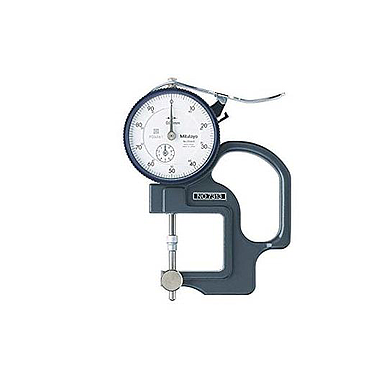
Why calibration is important for thickness gauges
Thickness gauges are often used in applications where even small deviations can affect product acceptance, coating performance, material usage, or downstream machining. Over time, normal wear, handling, environmental conditions, and repeated use can influence measurement behavior. Calibration is therefore a practical way to verify that the instrument still delivers dependable readings.
For many organizations, calibration is also part of a broader measurement control process. It supports internal quality systems, helps document the condition of equipment over time, and makes it easier to plan maintenance or replacement before measurement problems affect production.
What this service category typically supports
This category covers calibration services for thickness gauges from brands commonly used in industrial inspection and metrology. Examples in this range include services for Mahr, MITUTOYO, DEFELSKO, ELCOMETER, EXTECH, PCE, PROCEQ, TECLOCK, TQCSheen, and Cometech instruments.
Representative services listed here include Mahr Thickness Gage Calibration Service, MITUTOYO Thickness Gage Calibration Service, DEFELSKO Thickness Gage Calibration Service, and ELCOMETER Thickness Gage Calibration Service. These examples help illustrate brand coverage, while the core purpose of the category remains the same: supporting accurate and repeatable thickness measurement in real operating conditions.
When to consider recalibration
Recalibration is commonly considered after extended use, after an instrument has been dropped or exposed to harsh conditions, or when readings appear inconsistent against reference values or comparison tools. It is also common to schedule calibration at regular intervals as part of preventive quality assurance.
If your inspection process includes multiple dimensional instruments, it can be useful to align service intervals across equipment groups. In addition to thickness gauges, many facilities also manage calipers calibration and micrometers calibration under the same metrology plan.
How to choose the right calibration service
The most practical starting point is to match the service to the instrument brand, model family, and intended use. A gauge used for routine shop-floor checks may have different service priorities than one used in final inspection or documentation-heavy environments. Clear identification of the instrument and its role in your process helps ensure the service is appropriate.
It is also useful to consider your documentation needs, service history, and how the gauge fits into a larger inspection system. For example, users working with coating inspection tools may recognize brands such as DEFELSKO or ELCOMETER, while precision dimensional users may more often work with Mahr or MITUTOYO. The right calibration path should support both the instrument type and the operational context in which it is used.
Typical applications across industries
Thickness gauges are used in a wide range of sectors, including manufacturing, metalworking, plastics, coating inspection, maintenance, and general quality assurance. Depending on the instrument design and measurement principle, they may be applied to dimensional checks, material verification, surface coating assessment, or incoming goods inspection.
Because these measurements often influence acceptance criteria, process control, or maintenance planning, calibration records are valuable beyond the instrument itself. They provide a documented basis for measurement confidence and can support audits, internal reviews, and routine equipment management.
Supported brands and service examples
This category includes calibration service options associated with established brands used in industrial measurement. Examples include Proceq Thickness Gage Calibration Service, TECLOCK Thickness Gage Calibration Service, TQCSheen Thickness Gage Calibration Service, Cometech Thickness Gage Calibration Service, EXTECH Thickness Gage Calibration Service, and PCE Thickness Gage Calibration Service.
Brand-specific listings make it easier to identify relevant service options without turning the page into a simple product list. Instead of focusing only on names, the goal is to help buyers and quality teams find a suitable service route for the thickness gauge already in use within their organization.
Building a consistent calibration program
Thickness gauges are rarely managed in isolation. In many facilities, they are part of a broader dimensional and materials inspection setup that may also include depth gauges and hardness testing equipment. If you are reviewing multiple instrument types at once, it may also be useful to look at hardness meter calibration services as part of the same planning cycle.
A structured calibration program helps standardize service intervals, improve equipment visibility, and reduce the risk of unnoticed drift across critical instruments. For purchasing teams, maintenance departments, and QA personnel, that structure can make calibration easier to manage over time.
Finding the right service for your gauge
Choosing a calibration service is ultimately about protecting the integrity of your measurements. A well-matched service for the gauge brand and application can support better repeatability, clearer documentation, and more consistent inspection outcomes.
If you are reviewing options in this category, focus on the instrument you currently use, how often it is relied upon, and how important the reading is to your process. That approach makes it easier to select a thickness gauge calibration service that fits your real operating needs rather than a generic maintenance schedule.
-
-
-
-
-
-
-
-
-
-
-
-
-
-
-
-
-
-
-
-
-
-
-
-