

Anemometers Calibration Service
Reliable airflow measurements matter in HVAC balancing, cleanroom verification, ventilation studies, process control, and environmental monitoring. When an anemometer starts to drift, even small errors can affect compliance checks, troubleshooting work, and day-to-day operating decisions. This is why Anemometers Calibration Service plays an important role in maintaining confidence in wind speed and air velocity readings.
On this page, buyers and technical teams can review calibration support for a range of commonly used anemometer brands and understand where calibration fits into a broader instrument maintenance program. Whether the device is used in field inspections or controlled industrial environments, routine calibration helps keep measurements consistent, traceable, and fit for purpose.
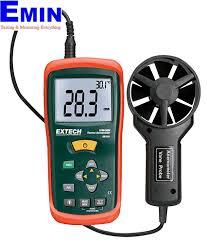
Why anemometer calibration is important
Anemometers are used to measure air velocity and airflow behavior in many technical applications. Over time, sensor wear, environmental exposure, handling, and normal use can shift measurement performance. Periodic calibration helps verify whether the instrument still reads within expected tolerance and supports better decision-making based on actual field data.
For maintenance teams, consultants, and quality departments, calibration is not only about accuracy on paper. It also helps reduce uncertainty when comparing data between sites, instruments, or inspection periods. In applications such as HVAC commissioning, laboratory ventilation, and industrial air movement studies, this can be especially valuable.
Typical instruments covered in this category
This category is relevant to a wide range of anemometer brands commonly used in technical measurement work. Examples include instruments from TESTO, TSI, Amprobe, BKPRECISION, KANOMAX, EXTECH, Kestrel, PCE, ELCOMETER, and Chauvin Arnoux. Calibration support is intended for organizations that need to keep these instruments performing reliably over time.
Representative services listed in this category include the TESTO Anemometer Calibration Service, TSI Anemometer Calibration Service, Amprobe Anemometer Calibration Service, and Kestrel Anemometer Calibration Service. These product entries help users quickly identify service availability by brand without turning the category page into a simple product list.
When to schedule calibration
A practical calibration interval depends on how the instrument is used, how critical the measurements are, and the operating environment. Devices used frequently in commissioning work, exposed to dust or variable temperatures, or transported regularly between job sites may need more frequent checks than units used occasionally in controlled conditions.
Calibration should also be considered after impact, suspected reading instability, or when measurement results no longer align with process expectations. For organizations working under internal quality systems, preventive calibration scheduling is often more efficient than waiting for measurement discrepancies to appear in the field.
How calibration supports operational reliability
An anemometer is often part of a wider set of environmental measurement tools. In practice, airflow data may be reviewed alongside light, dew point, or thermal exposure data depending on the application. Keeping these instruments calibrated helps improve consistency across the full measurement workflow and makes reporting easier for audits, maintenance reviews, or project handover.
If your team also manages related instruments, it may be useful to review services such as light meter calibration or dew point meter calibration. This can help standardize calibration planning across different environmental measurement devices.
Brand-specific service options
Different facilities often standardize on particular brands based on application history, user preference, or procurement policy. For that reason, this category highlights brand-oriented service entries such as BKPRECISION Anemometer Calibration Service, PCE Anemometer Calibration Service, ELCOMETER Anemometer Calibration Service, and Chauvin Arnoux Anemometer Calibration Service.
For users already working within a specific manufacturer ecosystem, browsing the relevant brand page can make selection easier. For example, teams using TSI instruments may prefer to review available options in that manufacturer range before choosing the appropriate calibration service entry.
Choosing the right service entry
The most effective way to select a calibration service is to start with the instrument brand and intended measurement use. Field technicians may prioritize turnaround and service matching for handheld devices, while laboratories or facility engineering teams may focus more on documentation, consistency between instruments, and scheduled service planning.
It is also helpful to verify that the service aligns with the actual device type being used. Anemometers may differ in sensing principle and application style, so choosing the correct service listing reduces unnecessary delays and helps ensure the calibration process is appropriate for the instrument submitted.
Part of a broader calibration program
Many organizations do not calibrate anemometers in isolation. Instead, they manage them as part of a broader maintenance and quality system for environmental instruments. This approach is useful for companies involved in building services, industrial safety, laboratory operations, or environmental testing, where multiple instruments contribute to one assessment or report.
Where broader environmental conditions are monitored, related service categories such as radiometers and heat stress meter calibration may also be relevant. Grouping services by application can simplify procurement and improve long-term instrument control.
Support for maintenance, compliance, and measurement confidence
Regular calibration helps extend the practical value of measuring instruments by confirming that readings remain dependable for the job at hand. For airflow instruments, that means greater confidence when assessing ventilation performance, checking indoor air movement, or documenting environmental conditions for technical records.
This category brings together service options for widely used brands, making it easier to identify a suitable route for maintaining your anemometer fleet. If your organization depends on accurate airflow data, selecting the right calibration service is a straightforward step toward more stable measurement results and better instrument management over time.
-
-
-
-
-
-
-
-
-
-
-
-
-
-
-
-
-
-
-
-
-
-
-
-