

Supermarket Scale
In retail weighing, speed at the counter matters just as much as accuracy. Stores, fresh food counters, delis, and packaging stations often need equipment that can calculate price, display weight clearly, and in many cases print labels or receipts without slowing down daily operations. That is where Supermarket Scale solutions become especially practical for commercial environments.
This category focuses on price computing and label-printing scales commonly used in supermarkets and other point-of-sale weighing applications. Depending on the workflow, users may need a compact unit for straightforward weighing and pricing, or a more advanced model with barcode, label, and communication functions for integrated retail processes.
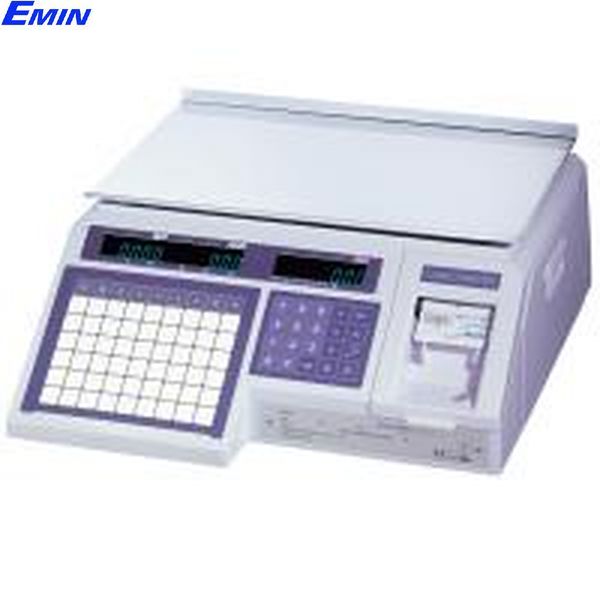
Built for daily retail weighing workflows
Supermarket scales are designed for repetitive use in sales areas where products are weighed, priced, and prepared for checkout or shelf labeling. Typical use cases include produce counters, meat and seafood sections, bakeries, convenience stores, and pre-pack operations. In these settings, operators benefit from fast stabilization, easy key access, and displays that are readable from both the staff and customer side.
Many models in this category support price computing, helping staff calculate total cost from unit price and measured weight. Other versions add printing capability for labels, product identification, or transaction handling, which is useful when products need to be packed and labeled before reaching the checkout area.
Common configurations in this category
The product range includes both price computing scales and printing scales, with capacities that fit common retail tasks. Several models operate in the 15 kg to 30 kg range with readability such as 5 g or 10 g, which is well suited for packaged foods, fruits, vegetables, or other medium-weight retail items. For lighter products that require finer resolution, there are also lower-capacity variants intended for more detailed weighing work.
For example, the KERN RPB 30K5DHM price computing scale supports dual weighing ranges suitable for standard shop-floor applications. On the label-printing side, models such as the JADEVER JLP-30K and CAS CL-5200 series are more appropriate when the process includes product labeling, data display, and front-counter efficiency.
Leading brands used in retail weighing
This category features established manufacturers such as CAS, KERN, and JADEVER. Each brand is relevant in commercial weighing, but the best choice depends less on the logo and more on the required workflow, display format, connectivity, and printing needs.
CAS is well represented here with CL-5200 variants for supermarkets, including models configured for different capacities and resolutions. KERN is a strong option for users who need a straightforward commercial price computing scale. JADEVER offers both compact price computing models and scales with integrated label printing, which can be useful for stores moving toward more structured product labeling and front-counter management.
How to choose the right supermarket scale
A good starting point is the capacity and resolution required for your products. If the scale is used mainly for produce, packaged foods, or counter sales, a 15 kg or 30 kg model is often suitable. If the business handles smaller portions or higher-value goods where finer increments are important, lower-capacity and higher-resolution options may be more appropriate.
The second consideration is workflow. A basic price computing scale is often enough for direct service counters where an operator weighs the item and communicates the total immediately. A printing scale makes more sense when the store needs labels with pricing or product information for pre-packed goods. Models such as the JADEVER JPT Printing Scale or CAS CL5200 printing series illustrate this difference well.
It is also worth checking available ports and integration features. Some units include interfaces such as RS232, USB, Ethernet, barcode scanner support, or cash drawer connectivity. These functions can be important in environments where the scale needs to interact with other retail systems rather than operate as a standalone device.
Price computing scale or label printing scale?
Although these two groups can appear similar, they support different operational goals. A price computing scale is ideal when the main task is weighing and calculating selling price at the point of service. This type is usually easier to deploy and works well in small shops, open counters, and fast retail transactions.
A label-printing scale adds value when products are prepared in advance and need labels for shelf display, traceability, or checkout scanning. For example, the CAS CL-5200-30P, CAS CL-5200P variants, and JADEVER JLP-30K are better suited to retail operations where printing speed, label format, and communication ports play a more important role than simple weighing alone.
Important practical features for store operations
Beyond weighing performance, everyday usability has a direct impact on productivity. Dual-side displays help both operator and customer confirm values quickly. Hot keys and function keys can reduce repetitive input during busy periods. Stainless steel pans and compact housings are also useful in food retail environments where regular cleaning is part of daily operation.
Power options matter as well. Some models are intended mainly for AC-powered counters, while others can also work with rechargeable battery support. This can be helpful in temporary sales points, market-style setups, or stores that need more flexibility in equipment placement. If accessories or replacement components are needed over time, users may also want to review available weighing accessories for broader system support.
Related weighing equipment for other applications
Not every weighing task in a business environment belongs on a supermarket counter. If the goal is inventory counting rather than selling by weight, a counting scale may be a better fit. For laboratory, formulation, or quality-related work where higher measurement sensitivity is required, users often move toward a precision scale instead of a retail-oriented platform.
This distinction helps buyers avoid selecting a scale based only on capacity. The right category depends on whether the task is selling, counting, analyzing, or preparing products for packaging and labeling.
Choosing for long-term retail efficiency
A supermarket scale is more than a weighing device; it is part of the store’s daily operating flow. The right model should match product range, transaction speed, required readability, and whether the business needs simple price calculation or a complete label-printing process. Features such as display layout, ports, keyboard design, and printer capability can make a meaningful difference over time.
By comparing the available models from CAS, KERN, and JADEVER within this category, buyers can narrow the choice to a scale that fits both current retail needs and future workflow expansion. A well-matched solution supports accurate sales, smoother service, and more consistent product handling across the counter or packing area.
-
-
-
-
-
-
-
-
-
-
-
-
-
-
-
-
-
-
-
-
-
-
-
-