

Floor Scale
When goods move through receiving, batching, packing, and shipping, reliable weight data becomes part of the process rather than a simple checkpoint. In these environments, a Floor Scale is often chosen for its ability to handle heavier loads, support stable weighing on the shop floor, and fit practical workflows in warehouses, production areas, and logistics operations.
This category brings together floor and low-platform weighing solutions used where standard bench scales are no longer sufficient. It covers compact platform models for routine industrial weighing, larger-capacity options for bulky items, and related indicators that help integrate load cells into a complete weighing station.
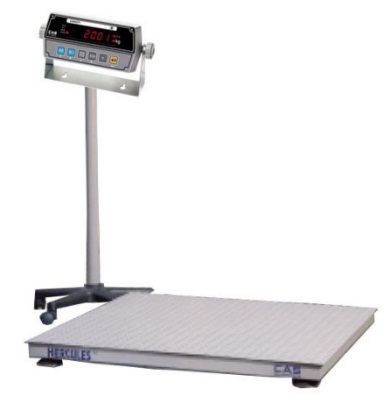
Where floor scales are typically used
Floor scales are common in facilities that need to weigh cartons, containers, raw materials, metal parts, bags, drums, or palletized loads close to ground level. Their format helps reduce lifting effort and makes them suitable for areas where goods are moved by hand truck, trolley, or pallet jack.
Depending on the workflow, these scales may be used for incoming goods inspection, production control, inventory checks, or final dispatch verification. For applications that require a different weighing principle, such as fine laboratory work or small-part verification, users may also review a precision scale range alongside floor-based systems.
Common product types in this category
Not every floor weighing task requires the same platform design. Some operations need a compact stainless platform for washdown-friendly environments, while others need a robust structure for heavier industrial loads. Models such as the KERN IFB 100K-3, KERN IFB 100K-3L, and KERN IFB 600K-2 illustrate how the category can span from medium-capacity platform weighing up to substantially heavier goods.
For facilities that handle larger or awkward loads, wider or longer weighing surfaces can improve positioning and speed. A product such as the PCE MS B1,5T-1-M pallet scale shows another practical approach: instead of a traditional closed platform, beam-style weighing supports allow easier use with palletized goods while keeping installation flexible.
How to choose the right floor scale
The first decision is usually capacity and readability. A scale should comfortably cover the maximum expected load while still providing enough resolution for the control task. For example, a warehouse shipping station and a production dosing point may both weigh products, but the level of precision they need can be very different.
The second point is platform size and mechanical layout. Large packages or pallets may need more surface area or an open beam design, while compact floor stations may prioritize a smaller footprint. The surrounding environment also matters: dust, moisture, cleaning procedures, and traffic conditions all influence whether a simple industrial platform or a more protected design is more appropriate.
Connectivity can also be important in modern operations. Some models in this category support interfaces used for printers, PCs, or serial communication, which can help with data transfer and traceability. If the weighing system needs add-ons such as ramps, printers, mounts, or connection components, it may be useful to explore weighing accessories as part of the final configuration.
Examples of weighing ranges and use cases
Lower-capacity platform models can serve packing, formulation, and quality control tasks where products are still relatively heavy but finer readability is needed than on a pallet scale. The KERN IFB 3K-4 and KERN KDP series, including KDP 300-3, KDP 3000-2, and KDP 10K-4, are useful examples of compact industrial platforms that fit controlled weighing at smaller capacities.
At the mid-range, products such as the KERN IXS 30K-3L, KERN IXS 60K-3L, and KERN DS 150K1 show how floor or platform weighing can support manufacturing, goods handling, and inspection work where loads are larger but stable readout is still important. For bulk material movement, shipping preparation, or pallet checks, higher-capacity options like the KERN IFB 600K-2 or the PCE MS B1,5T-1-M become more relevant.
Indicators and system integration
A floor scale is not always just a platform with a display. In many industrial setups, the weighing function is part of a broader system that includes load cells, indicators, controllers, and data interfaces. The PCE N45F Weight Indicator is a good example of a component that can be used where signal processing and display functions are needed in panel-based or integrated weighing applications.
This matters for OEM projects, machine retrofits, and process stations where users need more than a standalone scale. In those cases, selection should consider not only the mechanical load range, but also signal compatibility, display requirements, installation method, and communication with upstream or downstream equipment.
Manufacturers commonly considered
This category includes solutions from recognized industrial weighing brands, with KERN and PCE particularly visible in the representative products listed here. Their product coverage reflects two common needs in the market: robust platform weighing for routine industrial use, and configurable solutions that support different capacities, layouts, and system architectures.
Other manufacturers in the wider weighing portfolio, such as AND, CAS, Mettler Toledo, Excell, Laumas, and additional specialist brands, may also be relevant depending on the application context. In practice, brand choice is usually guided by weighing range, environmental conditions, required interfaces, and the level of integration expected on site.
When another scale category may be a better fit
Although floor scales are versatile, they are not the right answer for every weighing task. If the main requirement is highly detailed mass measurement for smaller samples, a compact laboratory-oriented platform may not be enough, and a dedicated precision solution is often more suitable. For formulation, laboratory preparation, or high-resolution weighing, users may compare with a laboratory analyzer scale or other fine-resolution categories.
Likewise, if the priority is piece counting rather than gross load measurement, a dedicated counting workflow can be more efficient than using a standard platform scale. The best choice depends on whether the process is centered on heavy goods handling, fine measurement, moisture-related analysis, or inventory counting.
Choosing with the application in mind
The most effective way to select a floor scale is to start from the real operating conditions: what is being weighed, how it is loaded, how often the station is used, and what data must be recorded. Capacity, readability, platform dimensions, environmental resistance, and interface options should all support the process rather than be considered in isolation.
For warehouse, production, and industrial logistics environments, this category provides a practical starting point for comparing industrial platform scales, pallet weighing solutions, and weight indicators within one workflow. A well-matched system helps improve consistency, reduce handling friction, and make weight data more useful across daily operations.
-
-
-
-
-
-
-
-
-
-
-
-
-
-
-
-
-
-
-
-
-
-
-
-