

Rack S7-400
In large PLC installations, the rack is more than a mechanical frame. It defines how power supplies, CPUs, communication modules, and I/O assemblies are organized inside the control system. For projects built around Rack S7-400 hardware, choosing the right rack format affects panel layout, expansion strategy, maintenance access, and system architecture.
This category focuses on Siemens SIMATIC S7-400 rack options used in centralized and distributed automation setups. Whether you are planning a compact station or a larger configuration with redundancy considerations, the available rack variants help align the hardware platform with real control cabinet requirements.
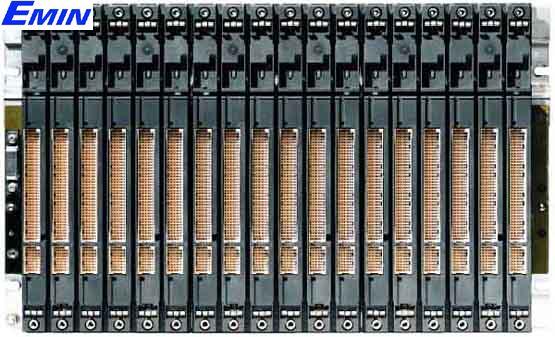
Role of an S7-400 rack in the control system
An S7-400 rack serves as the base structure that holds the modules of the PLC system in a defined slot arrangement. In practice, this means the rack supports the physical installation of key components while also shaping how the station is expanded and serviced over time.
For industrial users, the rack choice often comes early in the design stage because it influences slot count, power supply arrangement, and whether the installation is better suited to a centralized cabinet or a more distributed structure. In demanding applications, the rack is closely tied to system availability and future scalability, not just mounting convenience.
Main rack formats available in this category
This category includes several common SIMATIC S7-400 rack formats, covering different slot capacities and system layouts. Examples include UR1 and UR2 rack designs, along with UR2-H versions intended for architectures where higher availability is part of the planning logic. There are also CR rack options such as the CR2 18-slot version and the more compact CR3 4-slot version.
Representative products in this range include the SIEMENS 6ES7400-1TA01-0AA0 Simatic S7-400 UR1 Rack, 18 Slots, the 6ES7400-1JA01-0AA0 Simatic S7-400 UR2 Rack, 9 Slots, and the 6ES7400-2JA00-0AA0 Simatic S7-400H UR2-H Rack, 2 x 9 Slots. Aluminum rack versions are also available in selected models, such as 6ES7400-1TA11-0AA0 and 6ES7400-2JA10-0AA0, giving engineers additional options depending on installation preferences and project standards.
How to choose the right rack size and layout
The first selection factor is usually slot capacity. A 4-slot rack may be suitable for compact stations with limited module count, while 9-slot or 18-slot versions are more appropriate when the system needs multiple I/O, communication, or interface modules. If expansion is expected, selecting a rack with additional capacity can simplify future upgrades and reduce cabinet redesign work.
The second factor is architecture. Some racks are described for centralized and distributed use, which is important when the control design extends beyond a simple local PLC cabinet. In projects where continuity and structured redundancy matter, racks with redundant pluggable power supply arrangements or UR2-H style layouts may fit the application better than a standard compact configuration.
Examples of rack options for different installation needs
For larger assemblies, the SIEMENS 6ES7401-2TA01-0AA0 Simatic S7-400 CR2 Rack, 18 Slots provides a broader slot count and segmented structure that can be relevant in more complex stations. By contrast, the SIEMENS 6ES7401-1DA01-0AA0 Simatic S7-400 CR3 Rack, 4 Slots is a more compact alternative where panel space and module count are limited.
UR-series racks remain a common choice when flexibility is needed. The 6ES7400-1TA01-0AA0 UR1 Rack offers 18 slots, while the 6ES7400-1JA01-0AA0 UR2 Rack provides 9 slots in a smaller footprint. For projects that need a high-availability structure, the 6ES7400-2JA00-0AA0 S7-400H UR2-H Rack and the 6ES7400-2JA10-0AA0 UR2-H Rack Alu show how the platform supports layouts with two groups of 9 slots.
Integration with the wider Siemens automation ecosystem
Rack selection should not be isolated from the rest of the control platform. In many retrofit or expansion projects, engineers also need suitable accessories for communication, programming, and operator interaction. For example, signal and programming connectivity may depend on the right S7 and HMI cable options, especially during commissioning and maintenance work.
Communication infrastructure inside the cabinet can also matter when building out a reliable PLC network. Where relevant, related accessories such as Siemens bus connectors can support a cleaner and more maintainable automation layout. For operator-side visualization in similar control environments, users may also explore HMI solutions for S7-200/300/400.
Why material and mechanical format still matter
In industrial control cabinets, the mechanical design of the rack affects installation practicality as much as the electrical layout. Differences such as standard versus aluminum rack construction may influence handling preferences, mounting standards, or alignment with existing cabinet design practices. Even when the PLC performance is determined by the installed modules, the rack remains the foundation that keeps the station organized and serviceable.
Clear slot arrangement also helps with troubleshooting and future module replacement. When a plant needs long lifecycle support, a properly selected rack can reduce downtime during maintenance because technicians can work within a predictable module layout rather than a cramped or overfilled cabinet design.
Working with Siemens S7-400 platform requirements
Because these products belong to the broader SIEMENS automation portfolio, they are typically considered by users already operating within Siemens PLC environments. That is especially relevant when standardization, spare-part planning, and compatibility across projects are important purchasing criteria.
Before ordering, it is worth checking the expected number of modules, the intended cabinet architecture, and whether the project calls for centralized use only or a setup that may extend to distributed arrangements. Paying attention to those practical points makes it easier to match the rack format to the actual installation rather than choosing only by slot count.
Support your S7-400 project with a rack that fits the application
A suitable S7-400 rack creates the physical and structural basis for a stable PLC station. From compact CR3 configurations to larger UR1, UR2, and UR2-H layouts, the options in this category are geared toward different cabinet sizes, expansion plans, and availability requirements.
If you are comparing models for a new build, retrofit, or spare-part replacement, focus on the relationship between module capacity, installation format, and maintenance access. That approach will help you shortlist the right rack more effectively and build an S7-400 system that is easier to integrate, operate, and support over time.
-
-
-
-
-
-
-
-
-
-
-
-
-
-
-
-
-
-
-
-
-
-
-
-