

Cable Height Meter
Working around overhead lines, telecom spans, and field survey points often requires a fast way to estimate height without making physical contact. A Cable Height Meter helps technicians measure cable clearance and suspended line height from ground level, which is especially useful in utility work, telecom maintenance, and site inspection where safety and speed both matter.
On this page, you can explore handheld instruments suited to non-contact height measurement as well as related rangefinding tools that support height, angle, and distance calculations in broader survey tasks. The category is relevant for teams that need practical field instruments rather than lab-style measurement equipment.
Where cable height meters are used
These instruments are commonly used to check the height of overhead power cables, communication lines, and similar suspended conductors. In routine maintenance, they help verify ground clearance, support inspection planning, and reduce the need for direct access equipment when an initial measurement from below is enough.
They are also useful during site surveys, temporary line assessment, and pre-work safety checks. In many field situations, the goal is not only to know the vertical height, but to obtain a quick reading with minimal setup and without interfering with the line itself.
What to look for when selecting a cable height meter
The most important starting points are measurement range, supported cable size, resolution, and expected field conditions. For overhead line work, users typically compare the minimum and maximum measuring height they need, as well as how small a cable the instrument can reliably detect within that range.
Battery life and portability also matter in day-to-day field use. Instruments designed for repeated site work should be easy to carry, simple to read outdoors, and practical across changing temperatures. If your workflow includes broader distance or angle measurement, it may also be worth considering handheld rangefinding devices from the same ecosystem, such as solutions from HAGLOF for multi-function field measurement.
Representative instruments in this category
Among the dedicated models shown here, the MEGGER CHM series is a clear fit for overhead cable height measurement. Products such as the MEGGER CHM600E Series-Cable Height Meter and the Megger 659600 CHM Series-Cable Height Meter are intended for utility and telecom applications where the operator needs a direct reading of cable height from ground level. The listed range and resolution make them suitable for common field clearance checks rather than complex total-station style surveying.
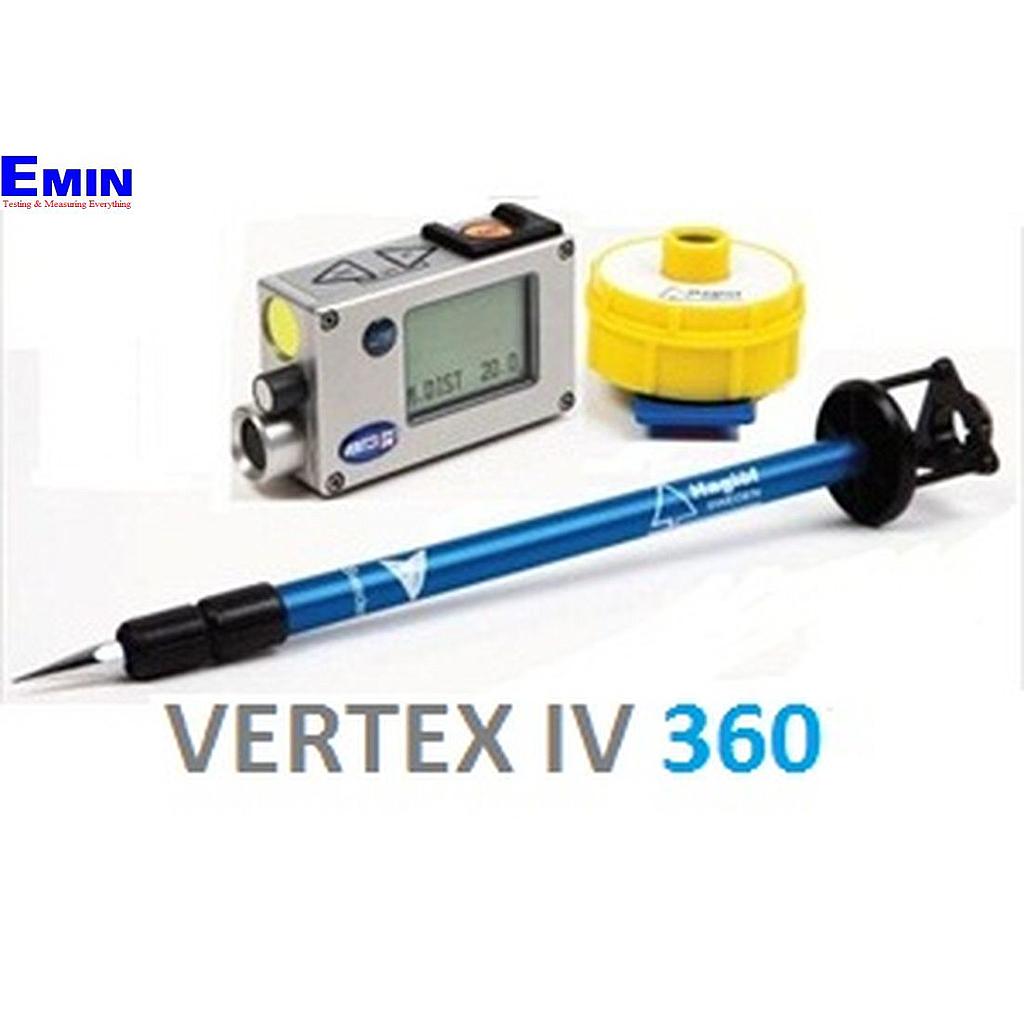
This category also includes examples like the HAGLOF Laser Geo 2 Handheld Laser Rangefinder and the HAGLOF 15-103-1103 Vertex Laser Geo Rangefinder. These are not limited to cable measurement alone; instead, they support wider height, angle, and distance measurement tasks. For users working across forestry, land survey, and site measurement, that broader functionality can be valuable when cable height is only one part of the job.
Dedicated cable meters vs. multi-function rangefinders
A dedicated cable height meter is usually the better choice when the main requirement is routine overhead line clearance checking. It is designed around a specific field task, with straightforward operation and measurement logic focused on suspended cables. That can make training, repeatability, and everyday deployment simpler for maintenance crews.
By contrast, a laser rangefinder or height measurement instrument can be more appropriate when teams also need slope distance, angle, or point-to-point height estimation in other applications. For example, the HAGLOF Vertex and Laser Geo platforms are relevant where users move between height measurement, distance estimation, and general outdoor survey workflows rather than staying exclusively within utility cable inspection.
Practical considerations for field measurement
In real operating conditions, accuracy depends not only on the instrument specification but also on the target, operator position, and environment. Suspended cable visibility, nearby obstructions, weather, and working distance can all affect how easily a measurement is taken. For this reason, a clear line of sight and correct positioning under or near the target span are important.
It is also useful to think about how measurement data fits into the rest of the field process. Some teams only need a direct reading on site, while others may combine cable or height measurements with additional inspection tools, communications equipment, or other mobile survey devices. In wider field operations, categories such as walkie-talkie or speed sensors may be relevant depending on the work environment.
How this category fits into a broader measurement workflow
Cable height measurement is often one step inside a larger inspection or survey process. A utility contractor may begin with line height verification, then move on to distance checks, clearance documentation, or location-based field reporting. In that context, choosing an instrument is less about one isolated feature and more about how well it supports the workflow your team already uses.
For users involved in specialist outdoor measurement, adjacent technologies may also be part of the same procurement scope. For example, teams working in environmental or marine projects may also review hydrography and oceanography survey equipment for separate field tasks, while still relying on compact handheld devices for day-to-day height and distance checks on land.
Choosing the right option for your application
If your priority is overhead power or telecom line clearance, a dedicated CHM-type instrument is usually the most direct option. If your work also includes forestry measurement, terrain assessment, or general survey support, a multi-function handheld device may offer better overall value by combining height, distance, and angle functions in one platform.
This category brings together practical instruments for teams that need dependable field measurement from a safe ground position. Reviewing the intended application, operating range, cable size, and surrounding workflow will help narrow the right choice more effectively than focusing on specifications alone.
Whether you are equipping a utility crew, telecom maintenance team, or survey operation, the right cable height measurement tool should match the task, environment, and frequency of use. Explore the available models in this category to compare dedicated cable meters and broader handheld rangefinding solutions for your field requirements.
-
-
-
-
-
-
-
-
-
-
-
-
-
-
-
-
-
-
-
-
-
-
-
-