

Cleanroom wipes
Contamination control often depends on small consumables as much as on major equipment. In controlled environments for electronics assembly, laboratories, and precision manufacturing, choosing the right cleanroom wipes helps reduce particles, protect sensitive surfaces, and support consistent cleaning procedures without introducing unnecessary lint or residue.
This category brings together wipes and related cleaning consumables used for delicate tasks in clean areas. Whether the goal is routine surface wiping, handling optical or electronic components, or supporting bench-level cleaning workflows, the right material, texture, and format can make day-to-day maintenance more controlled and repeatable.
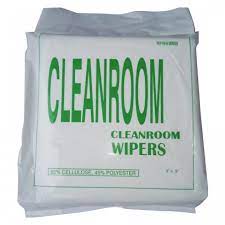
Where cleanroom wipes are typically used
Wipes for controlled environments are commonly used in electronics manufacturing, assembly lines, laboratories, inspection stations, and other spaces where loose fibers and surface contamination must be managed carefully. They are often selected for wiping tools, fixtures, worktops, glass, enclosures, and product surfaces that require a cleaner contact material than general-purpose paper wipes.
In a broader cleanroom workflow, wipes are only one part of the contamination-control system. They are often used alongside airflow-controlled equipment such as clean bench systems and personnel entry solutions like air shower units, depending on the process environment and cleanliness requirements.
Key differences between wipe materials
Not all wipes behave the same in use. Material construction affects absorbency, softness, particle generation, and suitability for dry or wet cleaning. In this category, examples include micro denier, polyester, non-woven, and delicate-task wipes, each of which can support different cleaning priorities.
For example, micro denier styles such as DaiHan DH.Wip3006, DH.Wip3007, and DH.Wip3008 are relevant when a softer, fine-fiber wiping surface is needed. Polyester options such as DaiHan DH.Wip3002 may be considered where durability and dimensional consistency matter, while non-woven formats like DaiHan DH.Wip3011 can be useful for general controlled-area wiping tasks. Products such as KIMTECH S280 Kimwipe Delicate Task Wipes are also commonly associated with light-duty wiping in electronics manufacturing and assembly environments.
Common product formats in this category
This selection includes sheet wipes for cleanroom handling, science wipers for routine technical use, and alcohol swab products for localized cleaning. The category therefore supports both broader surface-cleaning tasks and more targeted point-of-use applications.
Examples include KIMTECH Y2.42131 cleanroom wipers, Bemcot SL.Wip3091 wipers, and DaiHan DH.Wi9011 Science Wiper. For spot cleaning or preparation steps, Daihan medical MediTop disposable ethanol or isopropanol swabs can complement wipe-based cleaning workflows where individually packaged alcohol application is preferred for convenience or process control.
How to choose cleanroom wipes for your process
The most practical starting point is the cleaning task. A wipe used for routine bench cleaning may not be the best option for optical surfaces, precision parts, or contamination-sensitive assemblies. Buyers typically compare wipe material, sheet size, thickness, absorbency, and whether the product is intended for dry wiping, solvent use, or general clean-area maintenance.
It is also useful to look at how the wipe fits into the surrounding process. If the workstation already relies on controlled airflow or enclosure-based handling, the wipe should support that environment rather than become a new contamination source. For larger-area cleaning and floor or wall maintenance, users may also review related products such as dustcloth and mop solutions to build a more complete cleaning routine.
Representative brands and product examples
Several established names appear in this category, including KIMTECH, Bemcot, DaiHan, Scott, and Daihan medical. Each brand may serve slightly different use cases, from delicate wipes for electronics handling to cleanroom wipers in multiple fabric constructions and alcohol swabs for localized cleaning steps.
Representative items help illustrate that range. KIMTECH S280 Kimwipe Delicate Task Wipes are positioned for delicate wiping applications, while Bemcot SL.Wip3091 offers a compact wipe format for cleanroom use. DaiHan provides multiple alternatives across micro denier, polyester, and non-woven constructions, giving buyers more than one path when balancing softness, thickness, and general process compatibility.
Choosing by environment, not only by product name
In technical purchasing, the product name alone rarely tells the full story. A better approach is to match the wipe to the environment: electronics assembly, lab preparation, packaging of sensitive components, or routine maintenance in a controlled space. This helps narrow the selection based on real use rather than relying only on brand familiarity.
For example, delicate task wipes may be a logical fit for lighter-duty handling and surface care, while thicker or more structured cleanroom wipers may be more suitable for repeated wiping of benches, equipment housings, or tools. If the process includes enclosed handling or operator protection, categories such as biological safety cabinets may also be relevant in adjacent lab environments, although the wipe itself should still be selected according to the specific contamination and compatibility requirements of the task.
Why this category matters in day-to-day operations
Consumables like wipes are used frequently, so their impact is cumulative. A suitable wipe can help support cleaning consistency, reduce unnecessary particle release, and improve handling of sensitive products and work surfaces over time. In contrast, using a wipe that sheds, smears, or lacks the right texture can affect process quality even when the issue appears minor at first.
That is why many buyers compare more than one option before standardizing a cleaning routine. Looking across material type, dimensions, and intended application can make it easier to identify a practical fit for production, laboratory, or maintenance workflows without overcomplicating routine replenishment.
Find the right cleanroom wipe for controlled cleaning tasks
This category is designed for users who need low-contamination wiping solutions for clean areas, electronics work, and technical environments where surface care matters. From delicate task wipes and cleanroom wipers to science wipes and alcohol swabs, the available range supports both routine cleaning and more specific handling needs.
When comparing products, focus on the actual task, the working environment, and the material behavior you need in use. That approach usually leads to a more reliable selection than choosing by brand alone, and it helps build a cleaning process that is easier to maintain over time.
-
-
-
-
-
-
-
-
-
-
-
-
-
-
-
-
-
-
-
-
-
-
-
-