

Torque calibration
Consistent torque values are critical wherever fasteners, hand tools, and assembly processes must meet documented quality requirements. In maintenance workshops, production lines, and calibration laboratories, the ability to verify and adjust torque tools helps reduce product failures, improve repeatability, and support traceable inspection routines. This is where Torque calibration equipment becomes an important part of the wider calibrator ecosystem.
On this page, you can explore instruments and supporting devices used to check, verify, and calibrate torque wrenches and related torque tools across low, medium, and high torque ranges. The selection includes bench-style calibrators, mechanical supports, software for calibration workflows, and accessories that help create a more controlled and repeatable test setup.
Where torque calibration fits in industrial measurement
Torque is not just a tightening value on paper. It directly affects joint integrity, safety, and the long-term performance of assembled parts. If a torque wrench drifts out of tolerance, the result can be under-tightening, over-tightening, damaged threads, or inconsistent assembly quality.
Compared with broader instrument categories such as multifunction calibrators or temperature calibrators, torque calibration equipment is built around the mechanical verification of applied rotational force. That usually means a combination of torque sensing, controlled loading, fixture support, and data capture for evaluation against a required standard or internal procedure.
Typical equipment found in a torque calibration setup
A practical torque calibration station often includes more than one device. The core instrument measures applied torque, while the surrounding setup helps ensure that force is introduced smoothly and consistently. This is especially important when calibrating hand torque tools, where alignment, loading speed, and operator technique can affect results.
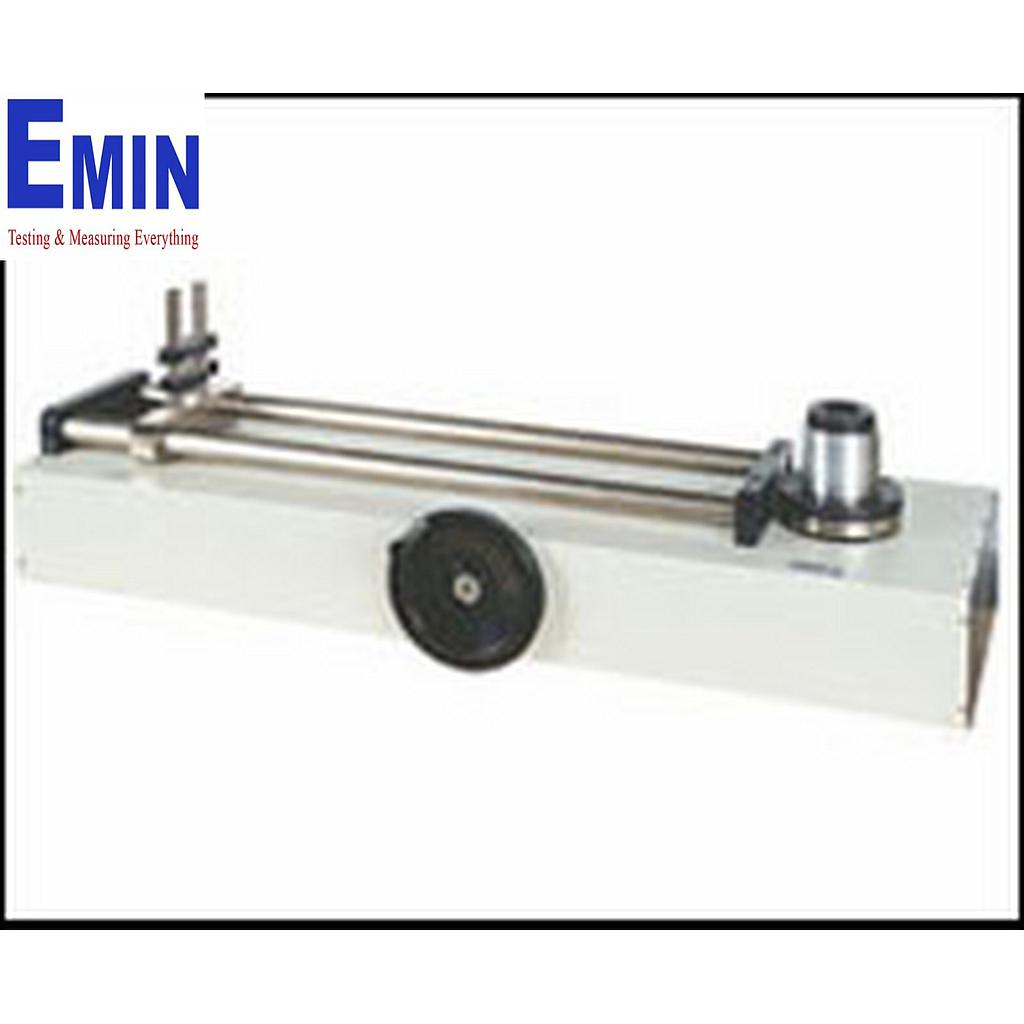
In this category, you will find examples such as dedicated calibrators, calibration software, and mechanical supports. For instance, the AEP Transducers TORQUEKAL6789 application program is intended for calibration workflows for hand torque tools, while the AEP Transducers mechanical support system is designed to apply load gradually and continuously during verification and calibration tasks.
Examples across different torque ranges
Torque calibration requirements vary widely by application. For small hand tools and light assembly work, lower-capacity instruments can offer the finer resolution needed for precise checks. The JISC IT-5 Torque Calibrator and JISC IT-20 Torque Calibrator illustrate this type of compact solution for lower torque ranges.
For general workshop and industrial torque wrench verification, bench instruments such as the Mecmesin TWC series cover several capacities, including 60 N.m, 100 N.m, 150 N.m, 600 N.m, and 1000 N.m. This range helps users match the calibrator to the working span of the torque tools they need to verify, rather than relying on one oversized device for every job.
Where higher torque capacity or more elaborate bench setups are needed, products such as the PCE-TCT 500 and PCE-TCT 2000 provide examples of systems intended for heavier-duty torque testing tasks. These models also reflect the growing importance of digital interfaces, internal memory, and configurable alarm thresholds in modern calibration environments.
How to choose the right torque calibration equipment
The most important starting point is the required torque range. A calibrator should suit the actual operating range of the tools being checked, not just the maximum value. In many calibration and verification tasks, performance at the lower end of the working range matters just as much as top-end capacity.
Next, consider resolution and accuracy. If you are working with low-torque tools, fine resolution can be essential for meaningful readings. For broader industrial use, users often look at the balance between capacity, stated accuracy, data output, and ease of setup. Some applications also benefit from bidirectional measurement for both clockwise and counter-clockwise torque verification.
It is also worth looking at the full test environment. Mechanical support fixtures, adaptors, and software can make a major difference to repeatability and documentation quality. A torque system is often more effective when the calibrator, support hardware, and reporting workflow are treated as one integrated solution rather than as separate components.
Why fixtures, supports, and accessories matter
In torque calibration, the measuring instrument is only one part of the process. The way torque is applied has a direct influence on the result. Mechanical supports help maintain alignment and allow load to be applied in a smooth, controlled manner, which is especially useful when calibrating click-type or direct-reading torque wrenches.
Accessories can also extend the usefulness of a calibration system. The Mountz 060064 Wheel 4" is an example of a supporting component that plays a role in the wider torque test setup rather than acting as a standalone calibrator. In real-world use, these accessories help adapt the system to different tool interfaces, drive sizes, and loading arrangements.
Data handling and calibration workflow considerations
Many buyers now evaluate torque calibration equipment not only by measurement performance but also by how well it supports documentation. Features such as internal memory, comparator functions, USB or RS232 communication, and software-assisted evaluation can simplify recordkeeping and reduce manual transcription errors.
For users managing several calibration disciplines, it may also be helpful to review related instrument categories such as pressure calibrators. While the measurement principle is different, the underlying purchasing priorities are similar: suitable range, dependable accuracy, practical connectivity, and a workflow that supports inspection, reporting, and ongoing quality control.
Manufacturers commonly selected for torque calibration applications
This category includes products from established names such as PCE, Mecmesin, Mountz, AEP Transducers, and JISC. Each serves a slightly different need within the torque calibration space, from compact calibrators for lighter torque values to software and mechanical support systems for more structured laboratory or workshop use.
Rather than focusing only on brand preference, it is usually more effective to compare manufacturers based on application fit. Capacity, interface options, support hardware, calibration procedure requirements, and the type of torque tools being verified will often determine the best match more reliably than brand name alone.
Choosing with confidence for your process
A well-matched torque calibration setup helps maintain tool accuracy, improve assembly consistency, and support quality documentation over time. Whether you are checking low-range hand tools, verifying higher-capacity torque wrenches, or building a more complete calibration bench with software and fixtures, the right selection depends on range, repeatability, and workflow requirements.
Browse the available products in this category to compare instrument types, supported torque capacities, and accessories that suit your application. A careful choice today can make routine verification faster, more repeatable, and easier to document across your maintenance or production environment.
-
-
-
-
-
-
-
-
-
-
-
-
-
-
-
-
-
-
-
-
-
-
-
-