

Screw feeder
When assembly speed, consistency, and operator efficiency matter, a screw feeding system can make a noticeable difference on the production floor. Instead of handling fasteners one by one, teams can streamline repetitive fastening work, reduce missed screws, and support a more stable cycle time in manual, semi-automatic, or integrated assembly processes.
Screw feeder solutions are widely used in electronics, plastic part assembly, small appliance production, automotive sub-assembly, and other industrial environments where fastening tasks are repeated at high frequency. On this page, you can explore feeder options for different screw diameters, screw lengths, feeding methods, and workstation requirements.
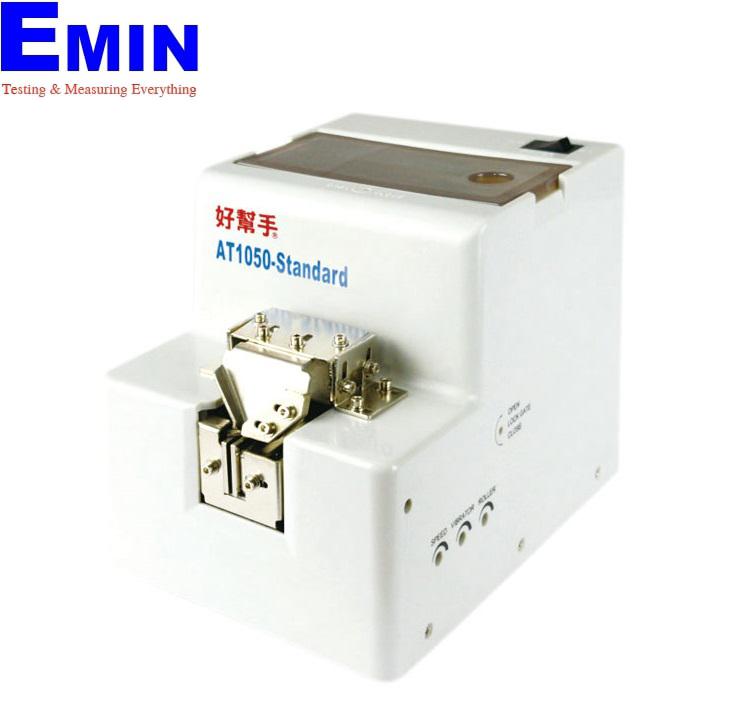
Why screw feeders are used in assembly operations
A screw feeder helps present screws in a controlled, repeatable way so the operator or automated tool can pick up and drive the fastener more quickly. This improves workflow compared with loose screw handling, especially in tasks that require frequent fastening of small parts, housings, brackets, or plastic components.
In many lines, the goal is not only faster feeding but also better process consistency. By reducing manual sorting and positioning, a feeder can help lower operator fatigue and support a cleaner assembly sequence. This is particularly useful where takt time is tight or where multiple identical fastening points must be completed every cycle.
Common screw feeder configurations in this category
This category includes automatic screw feeders designed for a range of screw sizes, from compact precision screws up to larger fastening formats commonly used in light industrial assembly. Depending on the model, the unit may support rail-based presentation, chamber feeding, or vacuum pick-up workflows.
Some products are suited for bench-top use in manual assembly, while others are better aligned with semi-automatic stations that combine a feeder, screwdriver, and control logic. For example, the HITECOM YX-HSM61 Automatic screw feeder is positioned as part of a system that works with an automatic tool head and PLC control, making it relevant where synchronized feeding and tightening are required.
Representative brands and product examples
Several established manufacturers are represented in this range, including HIOS, OHTAKE, Kilews, FUMA, and HITECOM. Each brand addresses slightly different assembly needs, from compact feeders for specific screw sizes to broader-range units that support mixed production environments.
For smaller screw applications, models such as the HIOS HSF-23, HIOS HSF-26, and HIOS HSF-30 are oriented toward defined screw size ranges, which can be useful when a production process is standardized around a narrow fastener specification. OHTAKE models such as the NSRI-26, NJ-2326, NJ-2330, and NJ-4550 illustrate another common approach: selecting a feeder based on the exact supported screw diameter and compatible rail set.
For broader coverage, FUMA models such as the FA-560, FA-580, and FA-590A support screw diameters across the M1.0 to M5.0 range, which may be practical for general assembly work or operations that need flexibility across several product variants. The Kilews KFA-0850A also stands out for applications where vacuum pick-up and continuous feeding are part of the workstation design.
How to choose the right screw feeder
The first point to confirm is the screw size range. Diameter, under-head length, and head dimensions all affect feeder compatibility. A feeder that matches the screw precisely will generally provide more reliable presentation and fewer interruptions during operation.
Next, consider the required throughput and work style. If your process is operator-driven at a bench, a compact feeder with stable delivery may be enough. If the station is part of a semi-automatic setup, it may be more important to look at signal integration, tool compatibility, and whether the feeder can support continuous operation at the required pace.
It is also worth checking hopper or chamber capacity, overall footprint, and power requirements. In space-limited cells, machine dimensions and layout can matter just as much as feeding speed. If maintenance access is important, supporting tools and accessories can also influence the final choice; in some cases, related items such as a hex wrench set are useful for adjustment and setup.
Applications across manual and semi-automatic assembly
Screw feeders are commonly used wherever fastening is repetitive and precision matters. Typical examples include assembling plastic enclosures, fastening PCB-related hardware, joining lightweight metal parts, and completing sub-assemblies that require stable tightening cycles throughout a shift.
In manual stations, the feeder primarily improves ergonomics and shortens the handling time per screw. In semi-automatic stations, it becomes part of a broader fastening workflow that may include an electric screwdriver, control signals, and interlocked sequencing. This is why feeder selection should be aligned not only with the screw itself, but also with the full assembly process around it.
Operational factors that affect feeding performance
Even when screw dimensions are nominally compatible, real-world performance depends on process details. Screw shape consistency, head geometry, shaft tolerance, and part cleanliness can all influence how smoothly a feeder presents screws. This is especially important in high-cycle applications where even occasional misfeeds can affect productivity.
Environmental and layout conditions also matter. Units in this category typically operate from standard AC input with low-voltage DC output or adapters, making them suitable for many production areas. Still, temperature, humidity, cable routing, and workstation vibration should be considered during installation to support stable feeding behavior over time.
Building a practical assembly tool ecosystem
A screw feeder usually delivers the best results when it is treated as part of a complete workstation rather than a standalone device. Operators may still need supporting hand tools, adjustment tools, and maintenance items around the station, depending on the fixture design and changeover routine.
For example, teams that handle periodic maintenance or line-side troubleshooting may also review options in repair kit or browse other assembly tools for related workstation needs. These additions do not replace the feeder itself, but they can help keep fastening stations running more smoothly in day-to-day production.
Finding the right model for your process
The best choice depends on how closely the feeder matches your actual screw specification, target cycle time, and assembly layout. A dedicated model for a narrow screw size can be a good fit for fixed, repeatable production, while a broader-range unit may be more suitable for mixed jobs or evolving product lines.
Within this category, you can compare feeder options from HIOS, OHTAKE, Kilews, FUMA, and HITECOM based on size compatibility, feeding method, and workstation role. If your process involves manual fastening, vacuum pick-up, or PLC-linked operation, selecting the feeder with the right operating logic and mechanical match will usually have the biggest impact on long-term usability.
By focusing on screw compatibility, handling speed, and integration requirements, it becomes easier to narrow the range and choose a screw feeder that supports stable, efficient assembly rather than simply adding another device to the bench.
-
-
-
-
-
-
-
-
-
-
-
-
-
-
-
-
-
-
-
-
-
-
-
-