

DC power supply with output fixed (DC-DC)
Stable low-voltage rails are a basic requirement in embedded electronics, telecom hardware, industrial control boards, and many distributed power architectures. When the input source is already DC and the load needs a regulated lower or fixed output, DC power supply with output fixed (DC-DC) products provide an efficient way to convert and condition power without the complexity of a full AC front end.
This category is focused on DC-DC power modules designed for applications where engineers need predictable output behavior, compact integration, and reliable operation across changing load conditions. It is especially relevant for system designers looking for board-level conversion from common DC buses to the lower voltages required by processors, logic devices, communication circuits, and other sensitive electronics.
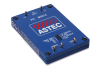
Where fixed-output DC-DC supplies fit in a power system
A fixed-output DC-DC supply is typically used after an upstream DC source such as a battery system, rectified bus, or centralized power rail. Its role is to step voltage up or down as needed while maintaining a regulated output for downstream circuits. In many designs, this approach improves efficiency, reduces heat, and simplifies local power distribution compared with using a single centralized regulator for every load.
These products are commonly selected when the designer already has a DC input available and needs compact conversion close to the point of load. If your application begins with mains input instead, a dedicated AC power supply or an upstream AC-DC stage may be the more appropriate starting point.
Typical characteristics of this category
The products shown in this category illustrate the strengths of modern non-isolated DC-DC converters: wide input tolerance, low output voltage ranges, high current capability, and compact mechanical format. This makes them well suited to powering digital loads that demand tight regulation and efficient conversion from common intermediate buses such as 12 V, 5 V, or 3.3 V domains.
Several listed modules also support high output current in a relatively small footprint, which is important for FPGA, CPU, ASIC, memory, and communications applications. Depending on the model, users can target outputs in low-voltage ranges such as 0.8 V to 1.8 V, or higher rails up to 5.5 V, while balancing current demand, thermal design, and board space.
Representative Artesyn modules in this range
This category includes multiple Artesyn solutions that cover a broad span of current and power needs. For example, the Artesyn PTH12040W is positioned for high-current applications with output capability up to 50 A, while the Artesyn PTH04040W supports even higher current demand in low-voltage conversion scenarios from a lower DC input range.
For designs that do not require the top end of that current range, models such as the Artesyn PTH12030W, PTH05030, and PTH12020W provide useful alternatives. Lower-power options including the PTH12010W, PTH12010L, and PTH12060L can be appropriate where space is limited and the load profile is more modest. Across the range, the common theme is efficient point-of-load conversion with practical operating temperature capability for demanding electronic environments.
How to choose the right DC-DC fixed-output module
The first selection factor is the input voltage range. The converter must match the available upstream DC bus with enough margin for normal variation, startup behavior, and transient conditions. In this category, some modules are intended for around 12 V input systems, while others are designed for lower input rails such as 5 V or 3.3 V class sources.
The second factor is output requirement: nominal voltage, allowable tolerance, and maximum current. A low-voltage digital rail may need very high current, while analog or support circuitry may demand less current but higher sensitivity to noise and regulation. Thermal performance also matters, especially when current rises and available airflow is limited.
It is also worth considering whether a fixed-output DC-DC module is the correct format for the full system. If the project needs operator-adjustable voltage for bench use, testing, or development work, a DC power supply adjustable ≤ 1KW category may better match that requirement.
Common applications in industrial and embedded electronics
Fixed-output DC-DC modules are widely used in industrial controllers, communication equipment, embedded computing platforms, instrumentation electronics, and distributed power systems. Their compact size allows power conversion to be placed close to the load, which helps reduce distribution losses and improves regulation at critical components.
They are also useful in systems with multiple voltage rails. A single upstream DC bus can feed several local converters, each optimized for a different subsystem. That architecture is common in high-density electronics where efficiency, thermal control, and board layout flexibility all affect long-term reliability.
Understanding the difference between fixed-output and other power supply types
Not every application should be solved with the same supply architecture. Fixed-output DC-DC products are usually chosen for integration into equipment, not as standalone laboratory sources. They emphasize conversion efficiency, compact packaging, and direct support for electronic loads rather than front-panel control or broad user programmability.
Where the requirement shifts toward higher system-level power delivery, users may also compare alternatives such as high power DC supplies above 1 kW. For applications involving elevated output potential rather than low-voltage board power, a high voltage DC power supply is a different class altogether.
Why efficiency and regulation matter in DC-DC conversion
In compact electronic assemblies, power losses quickly turn into heat, and heat directly affects reliability, enclosure design, and cooling cost. That is why efficiency, line regulation, load regulation, and ripple behavior are key selection criteria in this category. Even when two modules provide similar output voltage and current, differences in conversion performance can influence total system stability.
Good regulation helps maintain consistent operation during input variation and changing load demand. For digital electronics, this supports stable processor and memory behavior; for mixed-signal systems, it can also help reduce the risk of performance degradation caused by excessive ripple or poor voltage control.
Finding the right fit for your design
When comparing products in this category, it is helpful to start with the available DC input, then narrow by output voltage window, current demand, package size, and operating environment. The listed Artesyn modules cover a practical range from lower-power compact converters up to high-current options suitable for demanding point-of-load applications, while the broader ecosystem also includes brands such as Advanced Energy for buyers evaluating manufacturer portfolios.
A careful match between source voltage, load profile, and thermal constraints will usually lead to a better result than selecting by wattage alone. For engineers, OEM buyers, and maintenance teams, this category is best viewed as a source of efficient DC-DC building blocks for stable, fixed-output power distribution inside modern electronic systems.
-
-
-
-
-
-
-
-
-
-
-
-
-
-
-
-
-
-
-
-
-
-
-
-